
A learning programme can have a busy stakeholder list and still be waiting for the same answer next week. L&D is coordinating. The business is sponsoring. IT is supporting. Everyone agrees that the work matters. Nobody knows who can approve the examples, release participants or decide what to do when a prerequisite slips.

Clear ownership is practical, rather than ceremonial. It connects a piece of work to the person who will act, the person who can decide, and the people whose input is needed. Tailor that arrangement to your programme instead of distributing a standard responsibility chart and hoping it explains itself.
Name the decisions before you name the committee

List the decisions likely to affect delivery: audience selection, content approval, participant availability, access, facilitator preparation, changes and follow-through. Ask which of them must happen before other work can proceed. This exposes the dependencies a general stakeholder list tends to hide.
Separate preparing a recommendation from approving it. A coordinator might collect cohort requirements and propose dates; operational managers decide whether those dates preserve cover. A facilitator can flag a confusing task; the business owner confirms the approved process. That distinction helps people contribute without inheriting authority they do not hold.
Give each item an owner who can recognise it

Describe responsibilities as actions. “Own stakeholder engagement” is broad enough to mean almost anything. “Confirm which regional managers approve learner release and send the agreed briefing” is work somebody can complete.
For each important item, capture four things:
- Action owner: who moves it forward?
- Decision owner: who approves or chooses when options conflict?
- Required input: whose information is needed before the decision?
- Decision point: when is an answer needed, and what depends on it?
One person can hold more than one role. Make each responsibility clear: NewSkilz coordinates the agreed programme work, while your business and technical owners lead decisions on systems, processes and priorities.
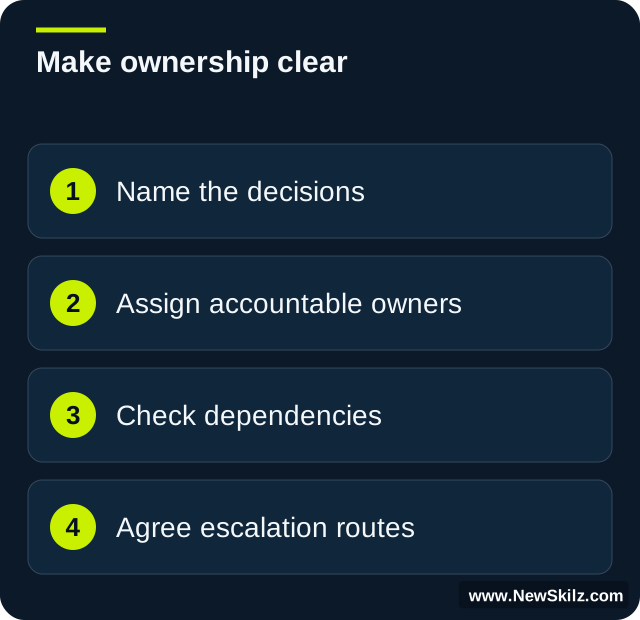
Test the arrangement with a real dependency

In an illustrative service programme, regional teams need training on a revised escalation process. L&D prepares materials, an operational lead approves the process, local managers nominate learners and a systems owner checks access.
During review, the facilitator finds that the example includes an unresolved exception. The facilitator records the question; the operational lead decides the approved handling; L&D updates the source material; the coordinator confirms which cohorts need the revision. Nobody has to guess whether spotting the issue also means owning its solution.
Walk through one likely complication with your stakeholders. If the handoff is unclear in discussion, it is likely to remain unclear when the delivery deadline arrives.
Escalate the choice, with its consequences

Escalation works better when it presents a decision than when it merely reports frustration. State what is unresolved, the options, the delivery impact and the latest useful decision date. Keep the tone factual and make it easy for the owner to respond.
Process exception approval is outstanding. We can retain the original cohort date and remove that activity, or move the cohort to include it. The first option changes the agreed learning focus. Please confirm the preferred option by the preparation review.
Agree a backup decision route for absences. “The sponsor will handle it” is fragile if the sponsor is unavailable for the period when approvals are needed.
Keep ownership alive after the meeting
Close each programme review by reading back the decisions and actions: named person, specific next step, due point and affected dependency. Send a brief record and update the shared plan. Ask owners to flag a problem when they discover it, rather than waiting for the next reporting cycle.
At the next review, examine changes to ownership as well as progress. A role change, supplier change or new region may alter who can approve what. Useful ownership is an operating habit. The chart is simply where you write it down.
Make it relevant to your team.
Use your goals, roles and real situations to choose the next useful step.